The Neuroscience of Why Change Fails
A keynote by Dorka Nagy-Józsa
Most change programmes don't fail because of the strategy. They fail because they were designed for a brain that doesn't exist. This keynote shows what the research actually says about attention, habit and motivation at work, and what leaders can do about it on Monday.
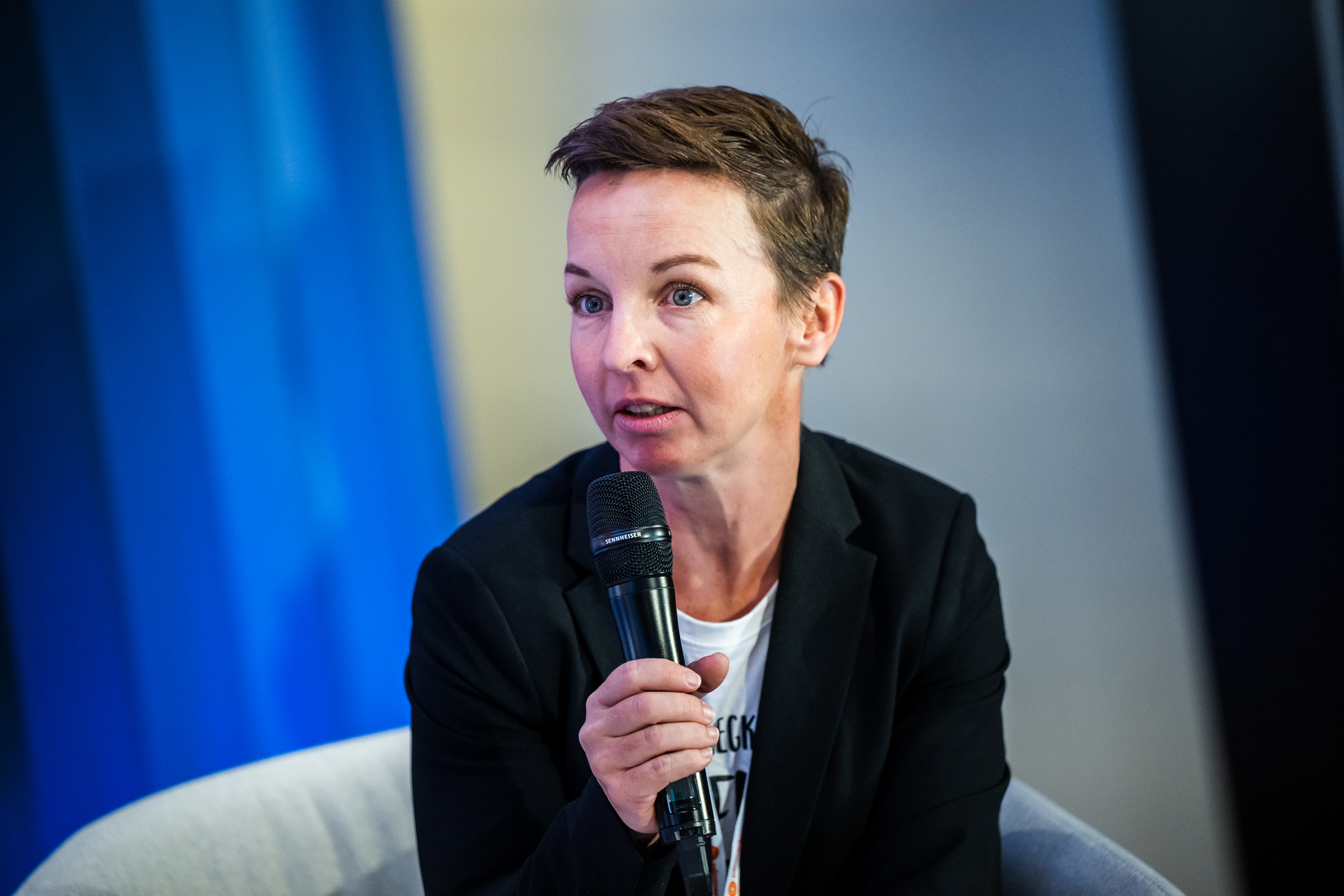
Change fails in the brain first, then in the org chart
Dorka Nagy-Józsa has spent years finding out why most leadership development fails: the three-day hotel workshop where everyone learns their personality type and goes home unchanged, the transformation roadmap that assumes people will concentrate for an hour when the research says three minutes, the engagement survey that measures everything except whether anyone is actually still in the game.
The keynote takes these apart one by one. Personality tests that become excuses instead of development tools. Three-minute attention spans and what neuroscience really says about how leaders hold a room, a meeting, a programme. Back-sitting: the silent crisis where your best people show up every day but have stopped looking forward and stopped steering. And the uncomfortable truth that most development programmes are designed to fail, because they treat leadership as a vitamin deficiency you can fix with a two-day dose.
Then it gets practical. The neuroscience-backed alternative is not a framework. It is daily practice, feedback, failure and trying again, built into how the organisation already works. The audience leaves with a handful of concrete things to do the next morning, which, as one head of People put it from the front row, almost never happens at these things.
What people take home
- Why personality tests become excuses, and how to use assessment as a development tool instead
- Three-minute attention spans: what neuroscience actually says about leadership, meetings and change communication
- Back-sitting: how to spot the people who show up but have checked out, and what brings them back
- Why most development programmes are designed to fail, and the neuroscience-backed alternative
- Three concrete things a leader can do on Monday, tailored to the organisation's own change
Rooms where change is about to start
Senior leadership days and executive offsites before a transformation. HR and L&D conferences. Culture and change programmes that have stalled. Rooms of 150 to 1,500, from the boardroom to the plenary hall.
Recent stages on this theme include HR (R)EVOLUTION, HR FEST, HR Week (booked two years in a row) and senior leadership days for European industrial and logistics groups.
"She spent maybe 15 minutes methodically taking apart every culture transformation framework I've used for the last seven years. I was in the front row. It was uncomfortable in an extremely useful way. What I didn't expect was to leave with three actual, concrete things I could do on Monday. That almost never happens at these things."
How to book it
- Keynote
- 30-75 minutes, live, customised after a pre-event stakeholder call. Audience Q&A and a post-talk summary deck included. From €3,000 plus travel and accommodation.
- Languages
- English or Hungarian.
- By event type
- Town halls & all-hands, HR & L&D conferences, Leadership offsites & senior leadership days, AI & technology summits, Kickoffs & annual meetings, Procurement & supply chain congresses, Industry conferences (talent & leadership track), Corporate events in Budapest
- Related keynotes
- AI, Your Brain & the New Rules of Work · Built to Lead: Sport Science Meets the Boardroom
From the Y2Y Weekly
Questions organisers ask
How long is The Neuroscience of Why Change Fails keynote?
30 to 75 minutes, live on stage, with audience Q&A.
Can the keynote be tailored to our own transformation?
Yes. Every keynote is customised after a pre-event stakeholder call: your change programme, your audience, your language (English or Hungarian) and the behaviours you want to see on Monday.
Who is this keynote for?
Senior leadership days, HR and L&D conferences, transformation and culture programmes, and any room where a change initiative is about to start or has stalled. Audiences of 150 to 1,500.